
How to Decorate an Airbnb: A Practical Guide From a Host With 8 Listings
Pick a theme, paint with intention, light the room warmly, add art, then photograph it properly.
 verified
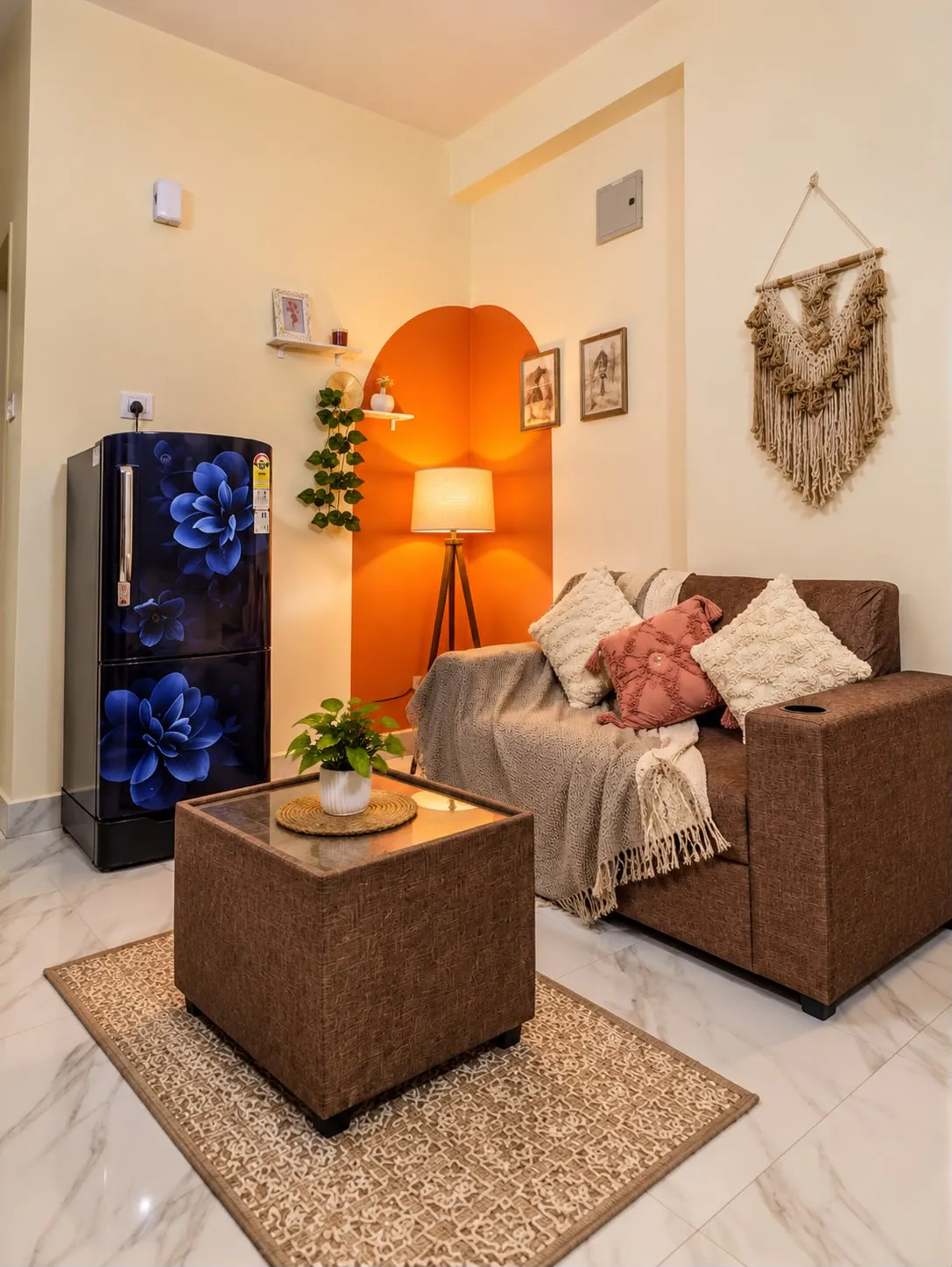
- Choose a theme before you buy anything. A palette, a few materials and one repeating motif keep a room cohesive.
- Painted shapes behind the bed or sofa do the job of expensive furniture, and they photograph well.
- Use warm, layered lighting. Cool white tubes make a good room look like an office.
- One or two pieces of art or textiles per wall are enough. Restraint beats clutter.
- Photos are part of decor. If the room doesn't photograph well, guests never see the work.
- Decor has to survive guests. Choose washable, secure and replaceable.
Introduction: Why Decor Matters for a Host
My partner and I started hosting in February 2026. Today we run 8 listings with a 4.96 average rating across 82 reviews. Guests judge a listing in seconds, from photos, before they read a word. Decor is what makes someone stop scrolling and click.
That said, decor can't rescue a space that is dirty, uncomfortable or badly equipped. Get the basics right first: a good bed, working essentials and a spotless clean. Our How to Start an Airbnb guide covers those. This guide is about the layer on top, and how to do it without a designer's budget.
When we started back in February 2026, our first property was a single 1BHK apartment in Hyderabad, India. We had no previous hosting experience and no idea how to decorate an Airbnb. The room was functional but forgettable: white walls, basic furniture, and no personality. Guests liked the location and the price, but they rarely mentioned the space itself.
My partner was a huge help in the decor department, I was just following her lead. Firstly we worked on theme selection then we moved to wall art and painting after that we selected the lighting, lamps, frames, beddings, curtains and mirrors accordingly.
To read more about our journey, check out our About page.
The photos in this guide are from our own properties.
Start with a Theme, Not a Shopping List
The most common decor mistake is buying things one at a time because they look nice. You end up with a room full of good items that don't belong together. A theme fixes that, and it also saves money because you stop buying things that don't fit. You can look for inspiration on Pinterest.
A theme isn't a style label. It's three decisions:
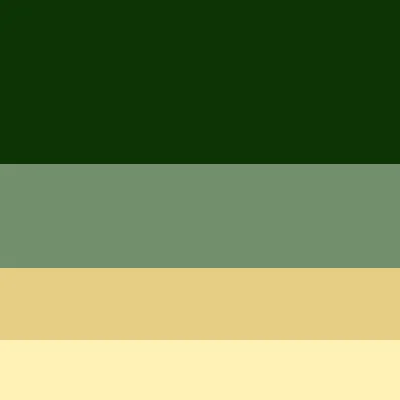
- A palette: one dominant colour, one secondary and one accent. Ours leans on warm earthy tones: terracotta and burnt orange, olive and sage green, blush pink and soft beige. To get some help around color palette you can check out color hunt website.
- A few materials and textures: such as jute, macramé, tufted cotton, wood and woven rugs. Natural textures make a rented space feel warm and lived in.
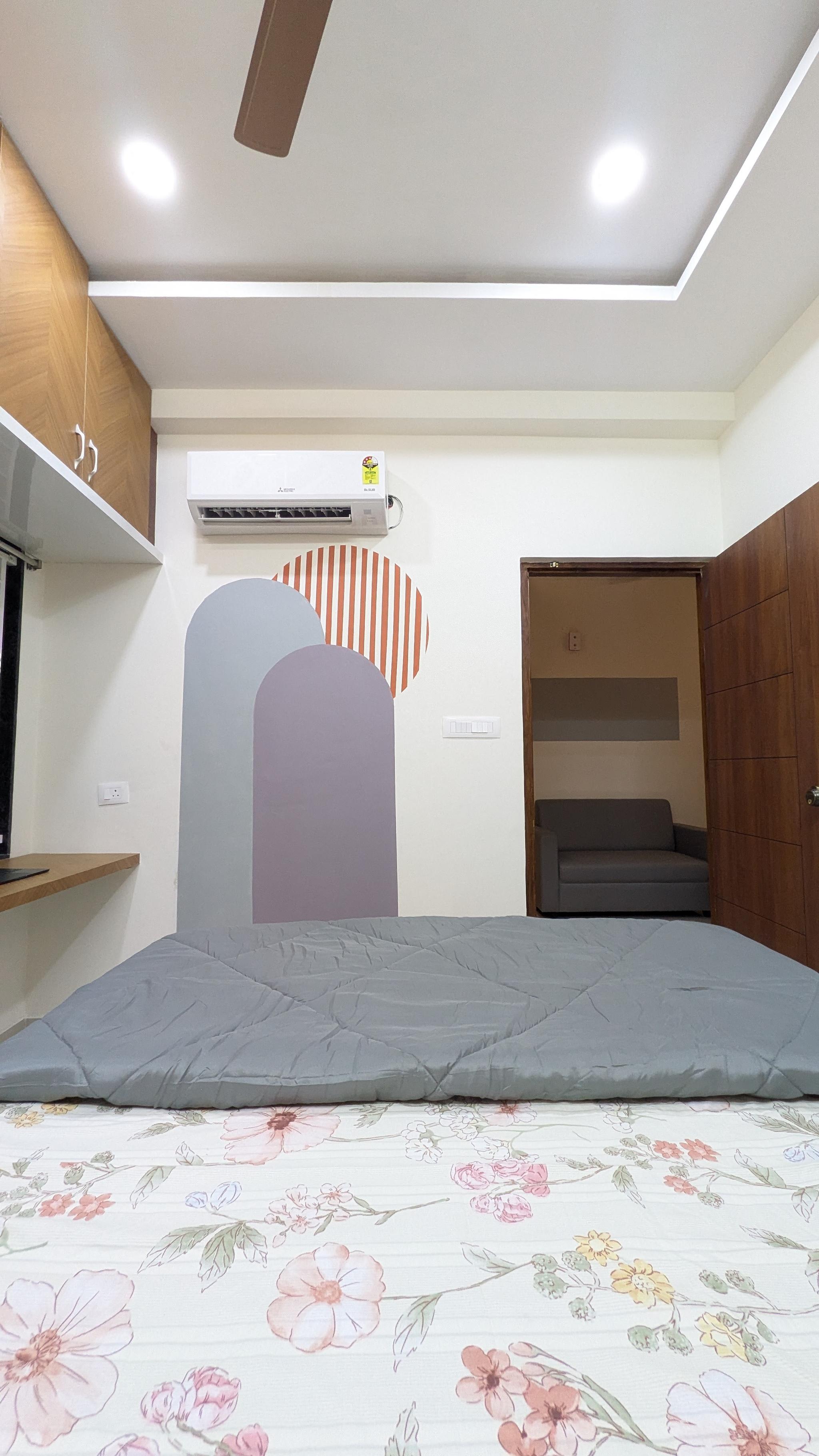
- One repeating motif: ours is arches. You'll see arch shapes in painted wall niches, headboard walls and panels in several of the photos in this guide. A repeated shape ties rooms together without anyone noticing why.
Work with what's already there
Don't fight your fixed features. If the floor is white or marble-look tile, build the palette around it. If the wardrobes are dark wood, pick warm tones that sit well beside them. Your theme should make the fixed items look intentional.
Make it repeatable
When you have more than one property, a theme becomes a template: the same palette family, the same cushion and throw colours, the same type of wall art and lighting. It speeds up setup and keeps quality consistent. If you look closely at our photos, you'll spot the same tufted cushions in more than one room. In most of our properties we have a constant blueprint like lamps, throw, wall art, workspace, plants, etc. The base stays the same we just experiment with a few elements here and there, in some cases if we find a better deal we do experiment with some other elements as well. Let your creativity flow and you will see wonders.
Quick way to choose
- Think about your guest: couples, families, business travellers or groups
- Look at the location and building: a heritage neighbourhood suits a different look than a new high-rise
- Collect five to ten reference images, then find what they have in common
- Pick the palette and write it down, including the paint codes and fabric names
Paint the Wall with Intention
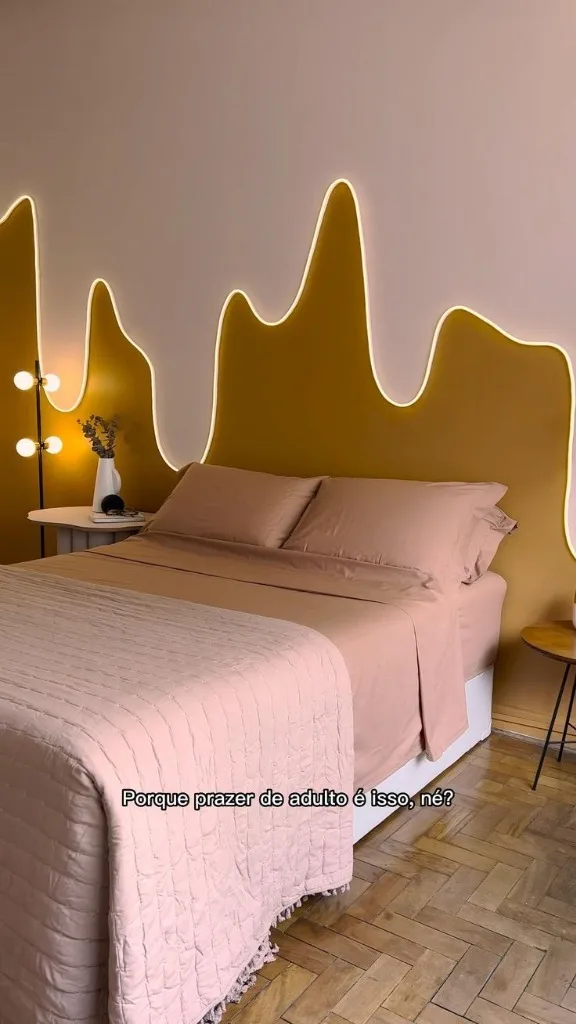
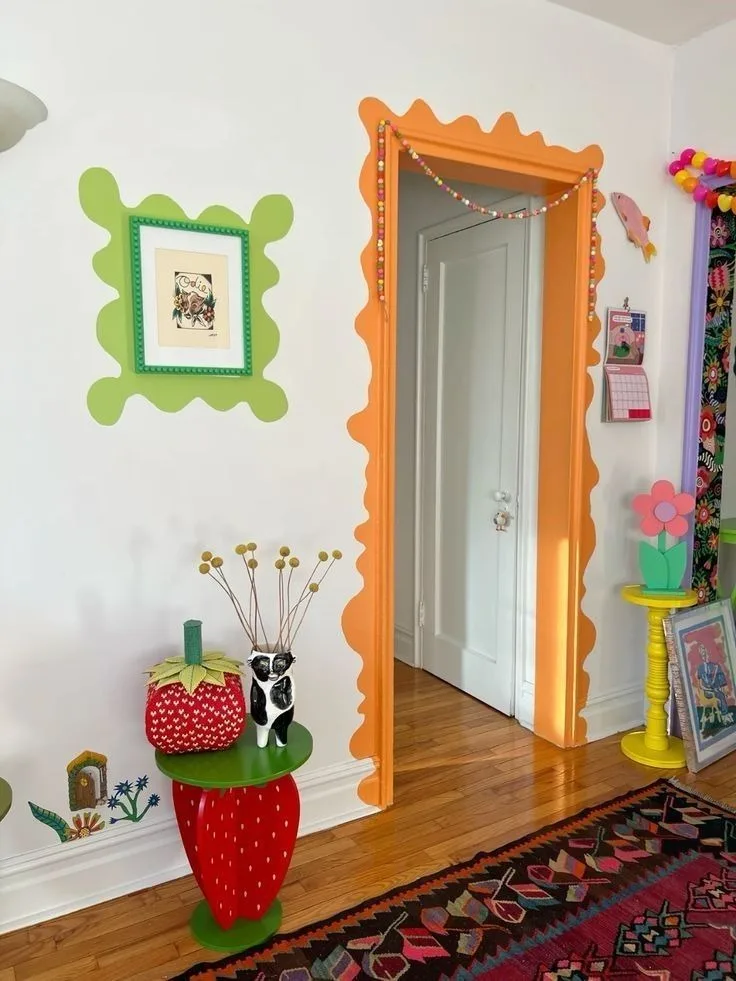
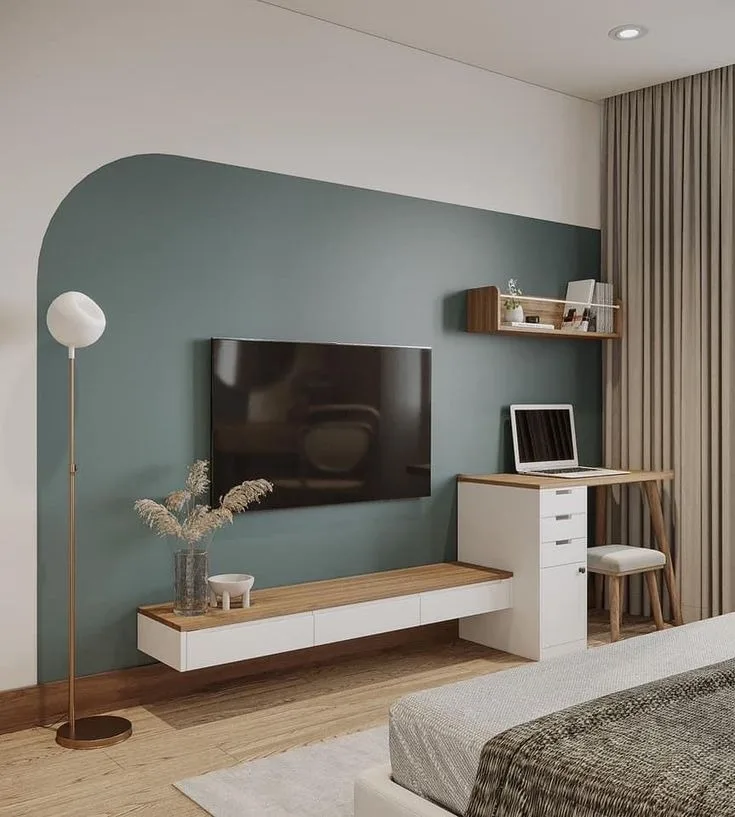
Paint is the cheapest big-impact decor you can buy. A painted shape behind the bed or sofa gives a room a focal point and replaces the need for an expensive headboard or statement furniture. It also takes up no floor space, which matters in small rooms.
In our properties we use:
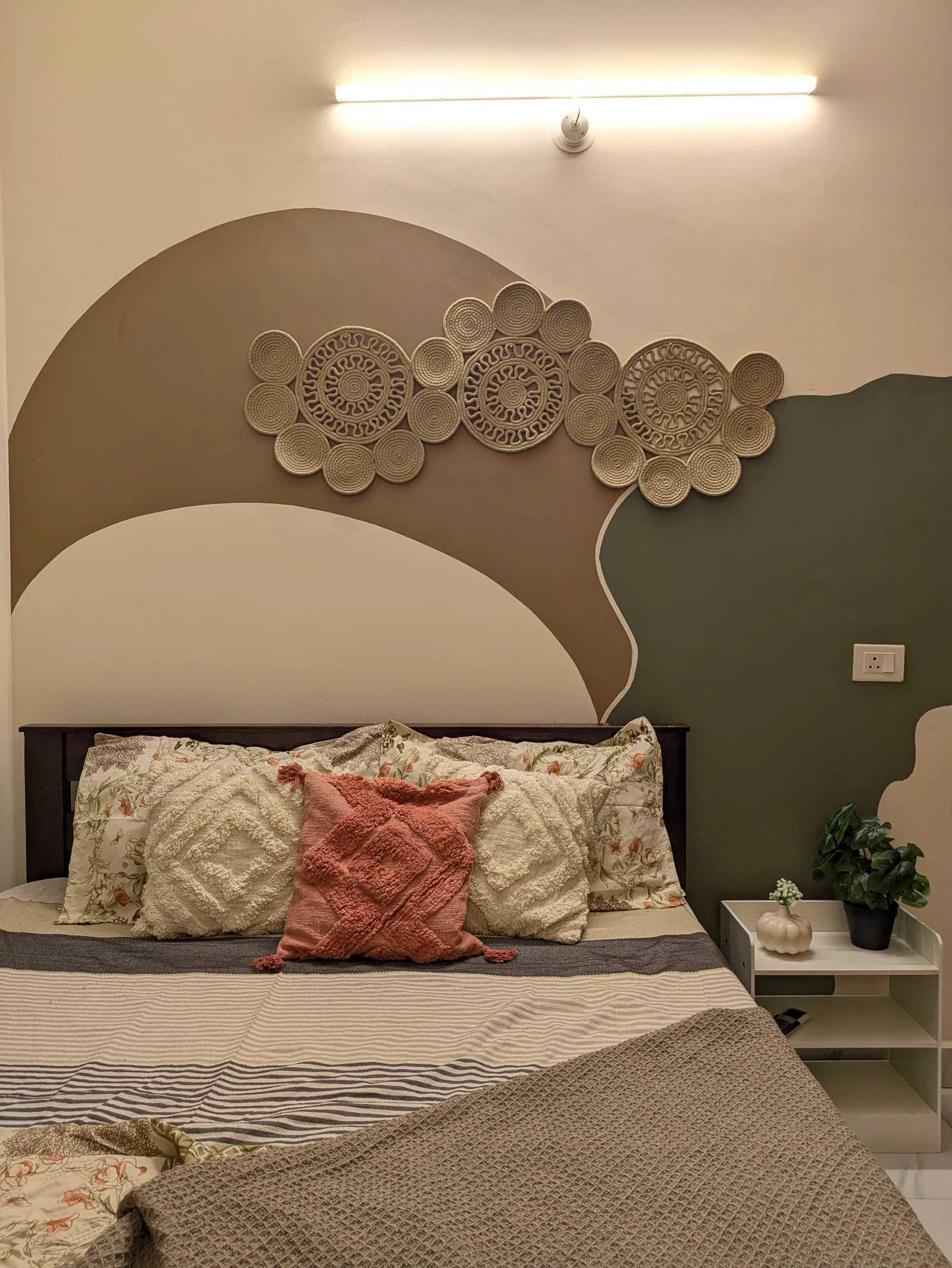
- Arch and curved shapes behind the bed, such as a taupe arch overlapping an olive green organic shape
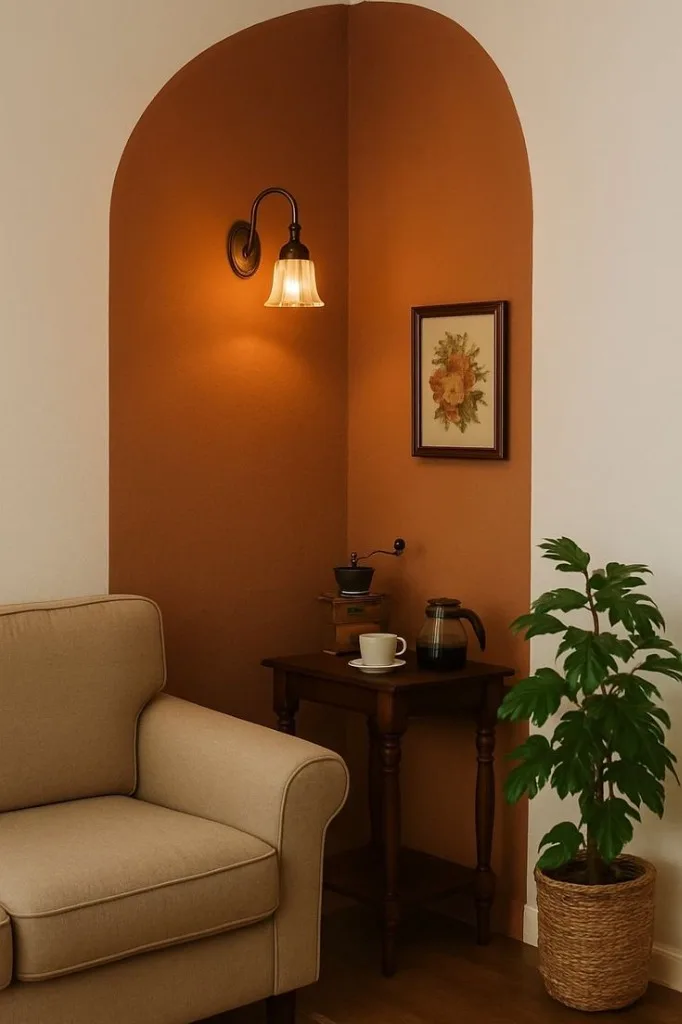
- A painted niche around a floor lamp, which turns an awkward corner into a feature
- A wavy painted frame around a window
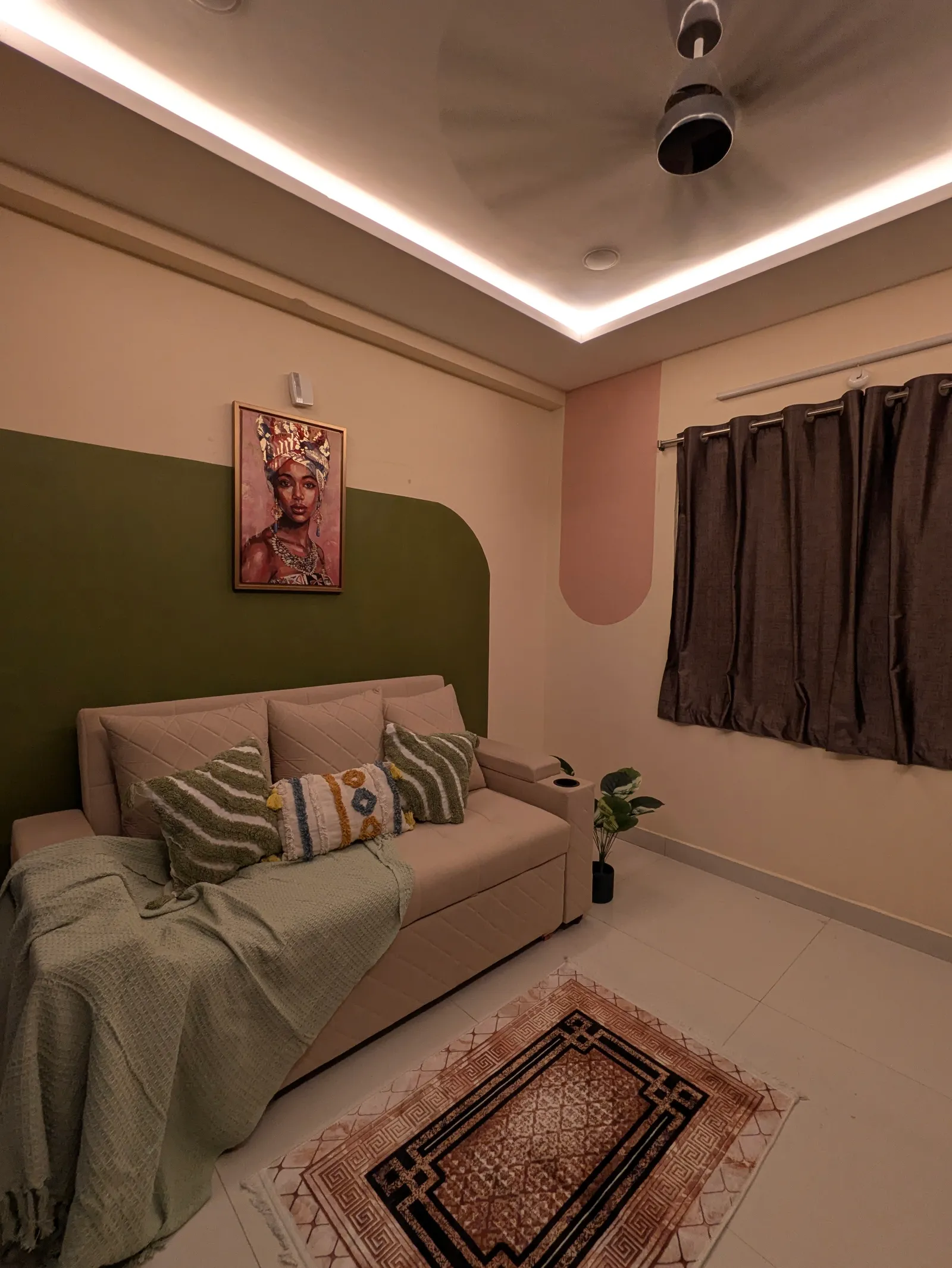
- Half-wall colour blocks with a curved edge, paired with a pill-shaped accent in blush pink


How to do it well
- Get permission first. If you rent, you need your landlord's written consent to paint. If you can't paint, use removable options such as large framed art, fabric panels or peel-and-stick products, and check the terms.
- Test the colour in your room. Paint a sample patch and look at it in daylight and at night under your warm bulbs. Colours shift a lot between the two.
- Choose a washable, scrubbable finish. Headboard walls take scuffs from luggage and pillows, so a finish you can wipe clean saves repainting.
- Keep it to two or three colours per room. More than that looks busy, and it's harder to touch up.
- Paint the big shape behind furniture. The sofa or bed then frames the shape and the lower edge stays tidy.
- Draw it first. Mark curves with chalk, a pencil on a string for arcs, or a paper template, and tape the edge before you paint. Take your time with the outline, because it's the part everyone notices.
- Keep labelled leftovers. Store a small tin of each colour for each property so scuffs can be fixed quickly.
Common paint mistakes
- Dark colours on every wall of a small, dim room
- Too many competing colours and shapes
- Glossy paint that shows every mark
- Forgetting that a bold wall must still look good in photos from several angles
Light the Room Warmly
Lighting does more for the feel of a room than almost any object. The most common problem in rentals is harsh, cool white light, which makes even a well-decorated room look like a clinic or an office.
Use warm white light, generally in the 2700K to 3000K range, and layer it:
- Ambient: a soft glow for the whole room, such as a cove light or LED strip tucked into the ceiling edge
- Task: light where people read or work, such as a bedside lamp or a linear wall light above the bed
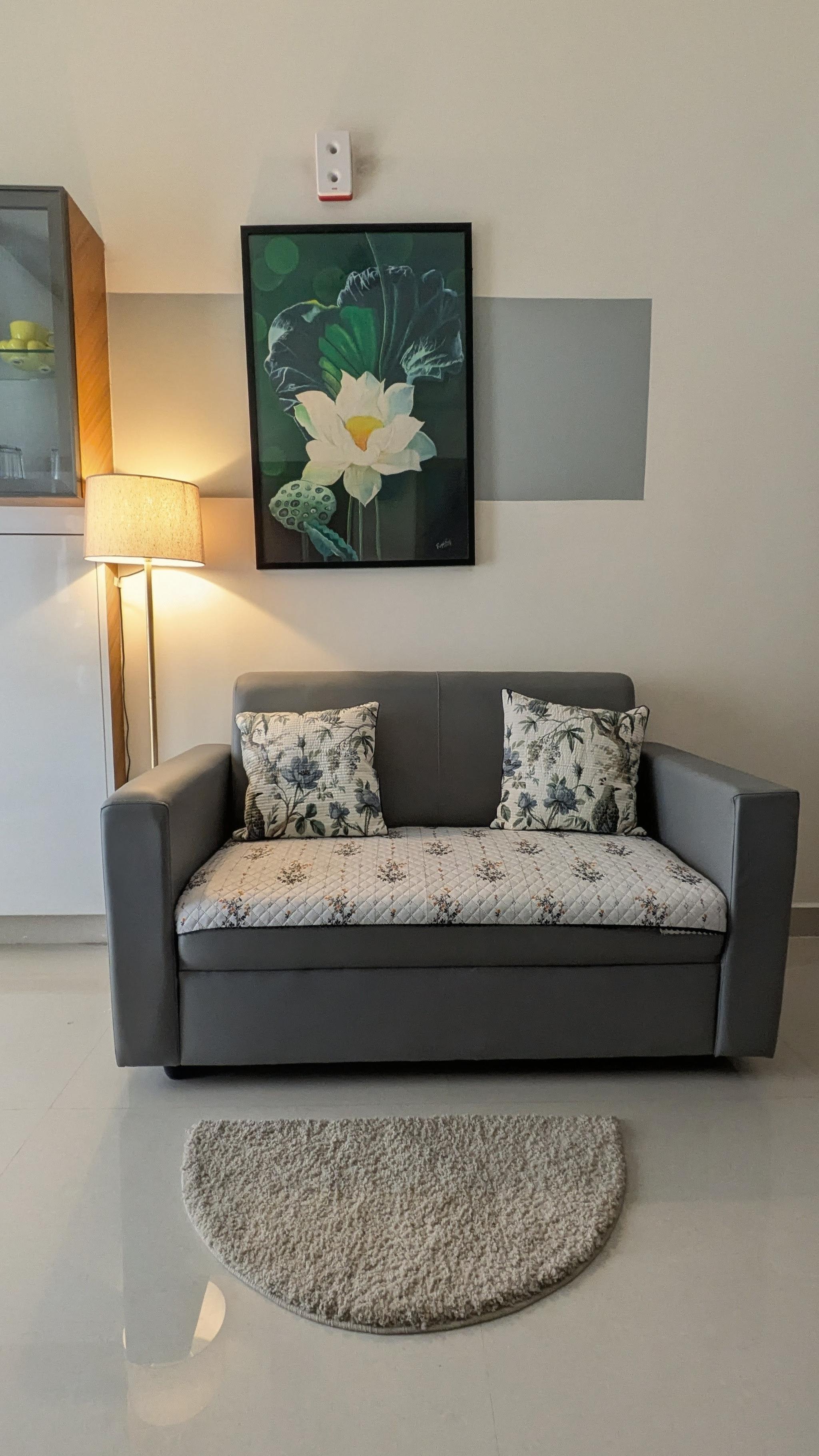
- Accent: light that adds mood and highlights texture, such as a floor lamp, a glass wall sconce or a lit painted niche
Our photos show each of these: a linear warm light above a bed, a tripod floor lamp in a painted niche, a glass wall sconce and cove lighting around a ceiling.
Practical rules
- Match the colour temperature within each room. Mixing warm and cool bulbs looks accidental and gives strange colour casts in photos.
- Add dimming or separate switches where you can, so guests can set the mood.
- Avoid bare bulbs and glare at eye level, especially over the bed.
- Choose sturdy fittings. Guests knock lamps over, so prefer wall-mounted lights or heavy bases.
- Hide cables and don't overload sockets. Have a qualified electrician install anything fixed, and use quality, certified LED drivers and strips.
- Stock spare bulbs in each property so a failed light is fixed the same day.
Add Paintings, Frames and Textiles
Art finishes the room. It gives the eye somewhere to land and makes a rental feel like a home with a personality, not a showroom of matching furniture.
What works
- Framed prints or paintings over the sofa or bed. One strong piece beats a crowded gallery wall
- Textile wall hangings, such as macramé or woven jute discs. They add texture, soften sound and survive guests better than glass
- Small shelves with two or three items, a plant or a framed photo
- DIY pieces that suit your theme, which add personality for little money. We built our own standing lamp using a tree branch i found on roadside, also built wall decorations using diet coke can inspired from instagram reels.
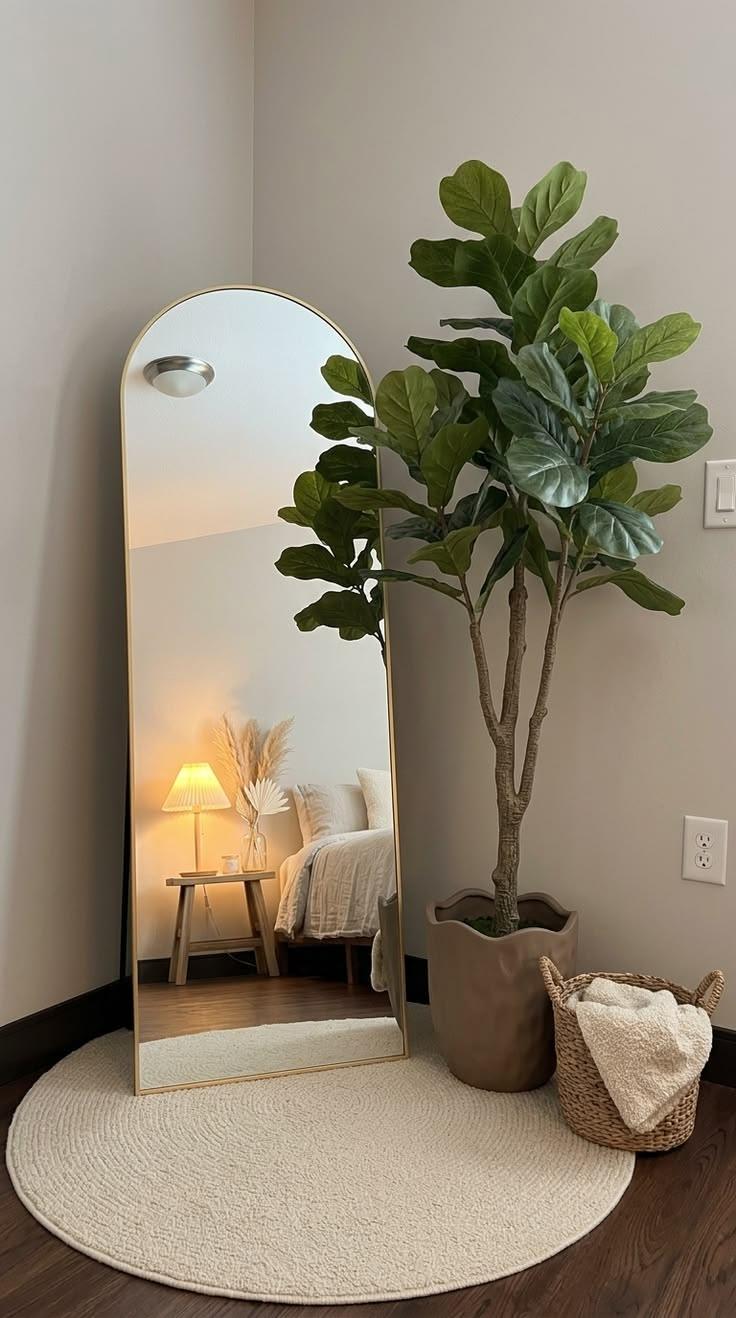
- Mirrors, which bounce light and make small rooms feel bigger
Hanging and placement
- Hang the centre of a piece at about eye level, roughly 145 to 150 cm from the floor, and keep it a hand's width or more above sofas and headboards
- Anchor art to furniture so it feels connected, not floating
- Use proper wall fixings or strong mounting hardware, since guests will lean and bump
- Consider acrylic instead of glass in frames, and avoid fragile or valuable items
Choosing the art
- Choose subjects that suit the whole range of guests. Avoid anything religious, political or likely to offend
- Use licensed prints or work from artists you've paid or credited, and don't copy famous artworks
- Look for local artists or crafts. They give the property a sense of place and a story to tell
- Keep a record of what hangs where, so you can replace anything that's damaged or goes missing
Greenery
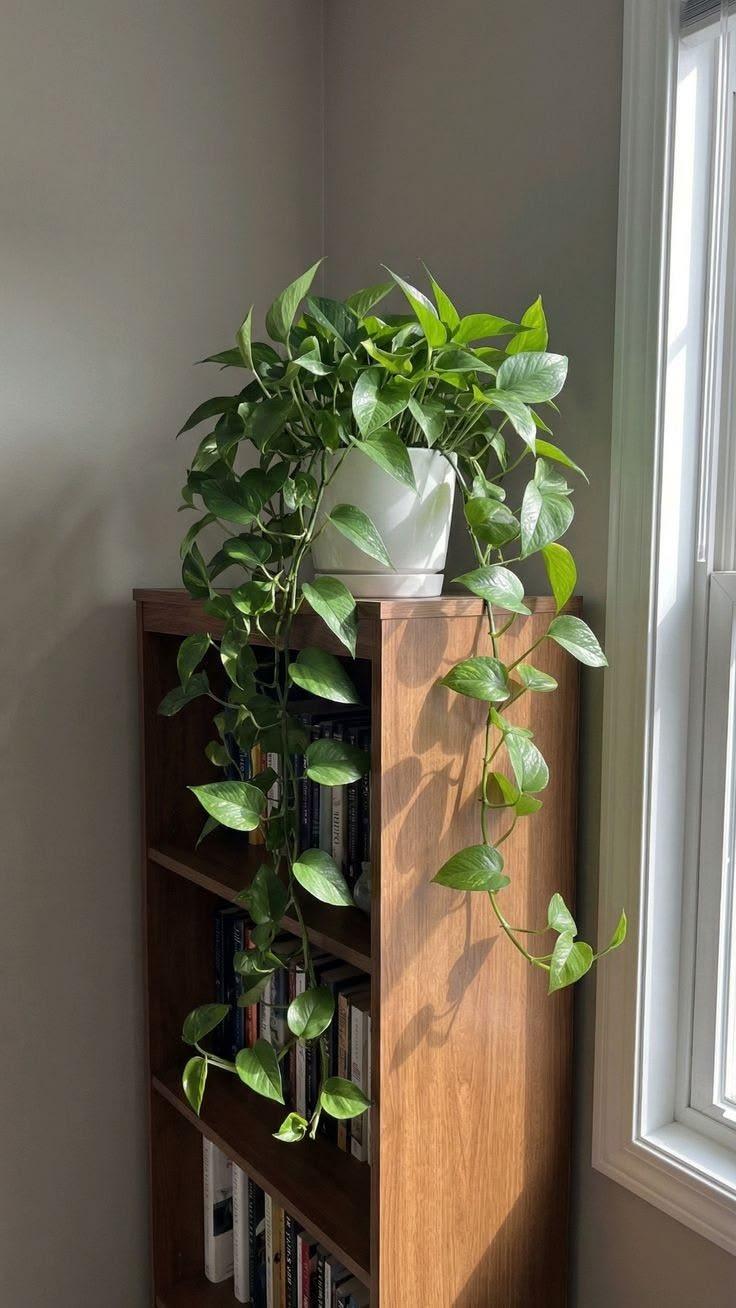
Plants lift a room quickly. We use artificial plants in several rooms because they need no watering and survive gaps between guests. Choose good-quality ones, avoid dusty or faded leaves, and wipe them at turnover.
If you wish to add real plants to you Airbnb I would recommend to go with some durable plants like money plant, snake plant, ZZ plant or spider plant. They are easy to maintain and require less watering. I would not recommend to use fresh flowers in the rooms as they wither and die within few days and you will have to replace them regularly, which can be a hassle.
Photograph It Properly
If decor only counts when guests see it, photography is part of the work. A beautifully decorated room with dark, crooked or cluttered photos earns nothing.
Before the shoot
- Make the bed perfectly, plump the cushions and smooth the throws
- Clear surfaces, remove cables, bins and personal clutter
- Turn on your warm lights and open the curtains, so natural light and lamps work together
- Check that your palette looks right on camera, since saturated colours can shift
During the shoot
- Shoot from a corner, at chest height, with vertical lines straight
- Take a wide shot and a few detail shots of each room: the painted feature, the lighting and the textiles
- Shoot at different times of day and keep the best, since colours change with the light
- Lead your listing with the most striking image, usually the main living area or the feature wall
Edit honestly
Light edits are fine: brightness, white balance, straightening and cropping. Heavy filters, strong saturation or HDR effects can make a room look different from reality, and that leads to "not as pictured" reviews. Your decor should look the same on arrival as it does in the listing.
For equipment, angles and a full shot list, see my photography guide.
Make Decor That Survives Guests
High-turnover rooms are tough on decor. Choose with that in mind.
- Washable fabrics: cushion covers, throws and bedding that go straight into the machine
- Spare sets: keep an extra set of cushion covers and throws per property for quick swaps
- Secure fixings: everything on a wall should be firmly mounted
- Duplicates: buy a spare of small items that are likely to break or walk away
- Inventory: keep a photo list of the decor in each room, so damage and missing items are easy to check at turnover
| Item | Notes |
|---|---|
| Wall painting and materials | paint, tape, labour |
| Lighting | fittings, bulbs, LED strips |
| Art and frames | prints, textiles |
| Cushions, throws and rugs | per room |
| Plants and small accents | artificial or real |
A decor budget
Spend more on the things guests touch and see most: the bed, the lighting and the main feature wall. Save on accent items that are easy to swap later.
Decor Mistakes to Avoid
- Buying items before choosing a theme
- Painting without landlord permission
- Cool white lighting everywhere
- Too many colours, patterns and objects in one room
- Fragile items, glass frames or valuables that guests can break or take
- Photos that look nothing like the room
- Decorating the property and forgetting the bed, cleanliness and essentials
A Room-by-room Decor Checklist
Frequently Asked Questions
How do I decorate an Airbnb on a budget?expand_more
Pick a theme first, spend on lighting and the feature wall, and save on accessories. Paint, warm bulbs, textiles and a few good prints give far more impact per rupee or dollar than furniture.
Can I paint the walls of a rental?expand_more
Only with your landlord's written permission. If you don't have it, use removable options, such as large framed art or fabric panels.
What colour lighting is best for an Airbnb?expand_more
Warm white, generally in the 2700K to 3000K range, with the same temperature used throughout a room.
What colours work best for an Airbnb?expand_more
There isn't one answer. A neutral base with one or two accent colours works in most places. Pick colours that suit your guests and look good in photos.
Does good decor increase bookings and prices?expand_more
It can help a listing stand out and support a higher rate, but results depend on your market, photos and reviews. Track your own numbers across occupancy and average daily rate to see the impact in your market.
How often should I refresh the decor?expand_more
Review each property regularly. Replace anything worn, faded or damaged, and refresh textiles and accents before the main seasons.
Next Steps
- 1Write down your theme: palette, materials and motif
- 2Check permission to paint, then plan one feature wall
- 3Swap harsh lighting for warm, layered lighting
- 4Add art and textiles, one focal piece per wall
- 5Photograph the room once it's ready. See my photography guide
- 6Starting from scratch? Read How to Start an Airbnb
Get The Complete 48-Point Furnishing & Sourcing Spec Sheet
Turnover checklists, maintenance schedules, and essential furnishing specs used across our 8 properties.
Written by Sagar Kashyap
Hi, I’m Sagar. My partner and I started hosting in February 2026, and today we run 8 listings with a 4.96 average rating across 82 reviews. I’m also a software engineer, so I like turning hosting problems into simple systems, checklists and free tools. I write down what actually worked for us, including the mistakes.
Related Field Guides
 Beginner / Launch
How to Start an Airbnb: A Complete Guide From a Host With 8 Listings
From legal setup and pricing tools to durable furnishing specs and automated guest messaging. Everything I learned scaling from 1 to 8 properties with a 4.96 rating.
 Operations
How to Clean an Airbnb Between Guests: The Turnover System We Use Across 8 Listings
Linen rotation, a structured 3-hour window, four final checks, stocked supplies and a backup cleaner. The system behind our 4.96 rating.
Get actionable, field-tested hosting tips.
Real turnover spreadsheets, supplier checklists, and pricing strategy case studies. Zero fluff, 100% operational hospitality data.
Disclaimer: this guide shares our personal experience and general information. It is not interior design, electrical, legal or financial advice. Have fixed lighting and wiring installed by a qualified electrician, and check your lease and local rules before painting or altering a property.